
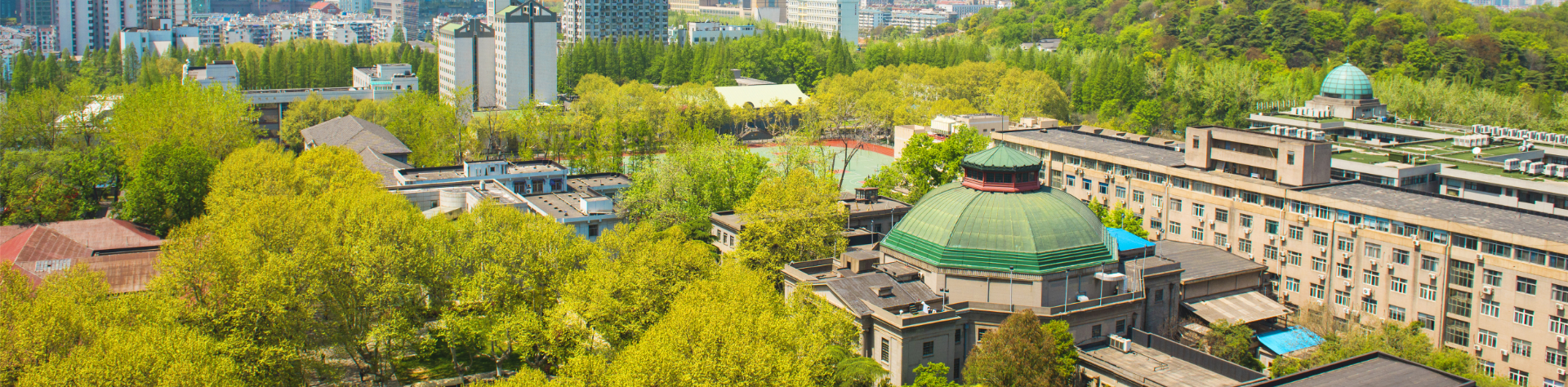
On May 23, Southeast University welcomed another major science and technology event amid the early summer rain. As the birthplace of radio education in China, Southeast University joined hands with the Chinese Institute of Electronics to build a high-level academic platform for the 4th Chinese Academic Conference on the Electromagnetic Spectrum, which opened in Nanjing. More than 1,000 experts and scholars from over 60 renowned universities, research institutes, key laboratories, and enterprises and institutions, including Zhejiang University, the 14th Research Institute of China Electronics Technology Group Corporation, and the Research Institute of China Mobile Communications Group, gathered along the Yangtze River to explore the contemporary theme of “spectrum integration and communication’s new quality.”
“Electromagnetic spectrum is the ‘lifeline’ of modern information society, a bridge connecting the physical world and the digital world, and a vital strategic resource for national security, economic development, and scientific and technological innovation,” said Cui Tiejun, conference chair and professor at Southeast University, in his opening remarks, clearly defining the purpose of the conference. Focused on emerging fields and scenarios, the conference presented an innovative picture of progress from the laboratory to industrial application, bringing together the collective wisdom of China’s electromagnetic spectrum community.
Jin Shi, Fellow of the Chinese Institute of Electronics and Vice President of Southeast University, said that the conference is centered on the integration of the electromagnetic spectrum space and communication technologies with new quality development. In response to rapid growth in emerging fields, increasingly scarce spectrum resources, and intensifying spectrum confrontation, the conference focuses on key technologies such as intelligent networking and electromagnetic spectrum intelligent management and control in emerging scenarios including the low-altitude economy and integrated air-space-sea systems. Through collaboration among government, industry, academia, research institutes, and users, it aims to promote innovative applications and integration of electromagnetic spectrum technologies across all sectors and fully empower new quality productive forces.
Notably, this year’s conference established an “Expert Working Group for Academic Exchange and Achievement Transformation in the Electromagnetic Spectrum Field,” creating a bridge for the transformation of achievements from research to application. At the opening ceremony, academic reports by Cui Tiejun on “Information Metamaterials for Integrated Sensing and Communication,” Gao Wen, Director of the Peng Cheng Laboratory, on “Digital Retina and Low-Altitude Sensing Networks,” and Yao Fuqiang of the National University of Defense Technology on “Electromagnetic Spectrum Maps” drew significant attention from both academia and industry.
Extending from the main venue, a science and technology corridor featured physical displays of a number of cutting-edge achievements, vividly illustrating China’s technological breakthroughs in the electromagnetic spectrum field. “We hope that through this conference, experts and scholars will fully exchange ideas, share resources, and work together through collaboration among government, industry, academia, research institutes, and users to promote innovative and flexible applications of electromagnetic spectrum technologies across all industries and further empower new quality productive forces,” said Cao Xueqin, Deputy Secretary-General of the Chinese Institute of Electronics.
According to the organizing committee, the conference will host a themed roundtable dialogue during the event, with 28 guests conducting in-depth discussions on topics such as low-altitude intelligent networking and spectrum security, electromagnetic cognition-enabled communications, cross-domain electromagnetic sensing and connectivity, and the utilization and management of electromagnetic spectrum with intelligent metasurfaces. Following the main forum, 17 specialized forums will be held successively, where more than 120 experts will present academic reports and engage in in-depth discussions on topics including new electromagnetic spectrum utilization and management based on intelligent metasurfaces, space-air electromagnetic sensing and big data analysis, and electromagnetic cognition-enabled communications.
“When the ‘small-aperture’ research in electromagnetic technology shifts toward ‘large-interdisciplinary’ innovation, we are opening up infinite possibilities for intelligent connectivity of everything,” Cui Tiejun said, expressing the shared sentiment of all participants. Southeast University is drawing a blueprint for new-quality productivity in communications technology with an open academic mind.
Source: People’s Daily
