

Recently, AAC Technologies’ newly developed 1G6P WLG lens, super-converging prism, and other optical solutions have been integrated into a customer’s latest mainstream flagship smartphone series. Among them, the 1G6P WLG lens is adopted across the entire lineup, while the super-converging prism is used in the high-end model.
This marks the first time that two WLG products have been simultaneously applied in the same mainstream flagship model, signaling that large-scale mass production and application of WLG technology has officially opened up and bringing consumers a new imaging experience.
1G6P WLG glass-plastic hybrid lens — advancing mobile optics further
The imaging configuration of the newly launched smartphone has been comprehensively upgraded. The main camera is equipped with a large-format sensor and supports OIS optical image stabilization. The lens system adopts a 1G6P WLG glass-plastic hybrid design, combining one WLG glass lens with six plastic lenses.
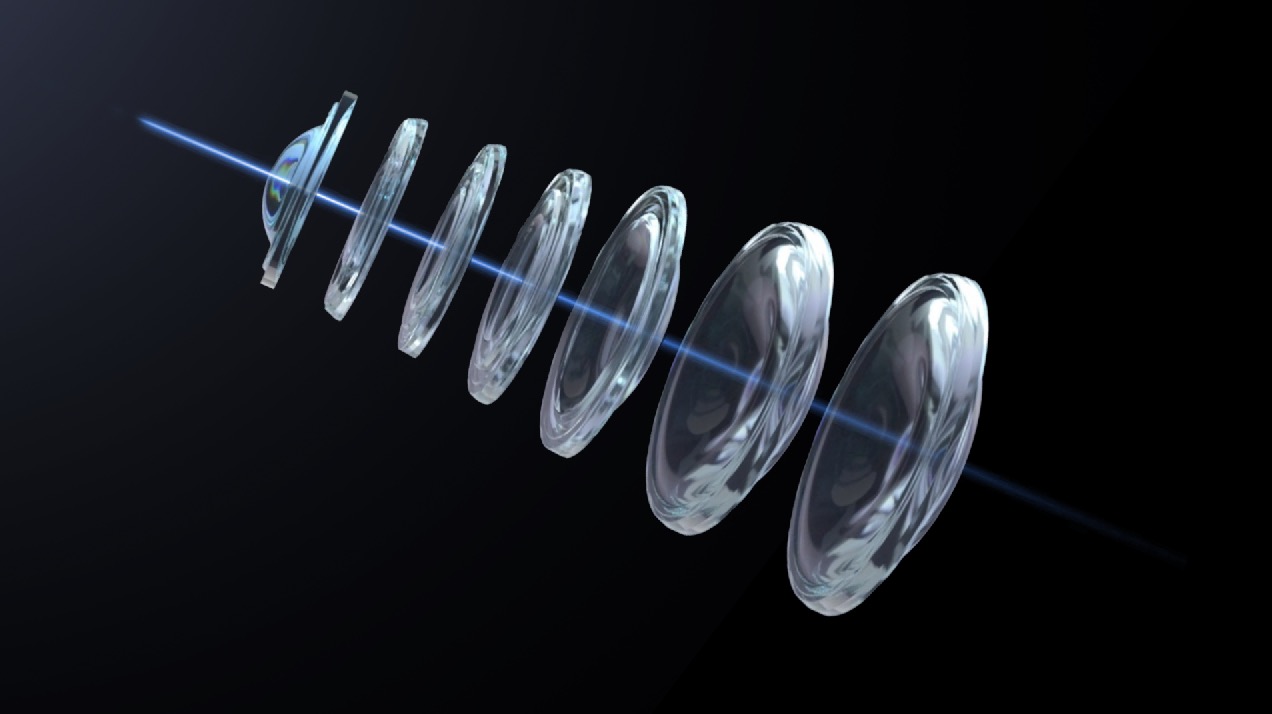
Compared with traditional seven-plastic-lens systems, the 1G6P WLG glass-plastic hybrid lens offers superior optical performance, including a larger aperture, higher resolution, and a thinner lens profile. This not only significantly reduces image noise in low-light environments, but also improves edge and close-focus image quality, making the final image more natural and transparent.
Relying on the outstanding hardware performance of the 1G6P lens, and through fine optical coating treatment on each lens element, flare and ghosting that may occur during mobile photography are greatly reduced, resulting in cleaner mobile imaging and further promoting the development of mobile optical technology.
Periscope prism integrated molding — higher process precision, stronger optical performance
The prism is a core component in a periscope telephoto lens. The newly released model uses a super-converging prism manufactured with AAC Technologies’ proprietary WLG integrated molding technology, achieving an integrated structure of convex surface + prism + concave surface.

The super-converging prism can gather light, increasing light intake by 30% and improving shooting performance in complex lighting conditions for periscope telephoto photography. It can also converge light and reduce the thickness of the phone, shrinking the module volume by 10% and breaking through structural constraints. After compensating the optical path via the convex-surface system, the reflected light can significantly improve modulation transfer function performance in “tilt-down,” “tilt-up,” and “shake” scenarios, further optimizing OIS stabilization.
The prism structure is complex and requires the integration of convex and concave lenses on the incident and exit surfaces. With WLG technology, the three-in-one integrated molding process eliminates the need for bonding and meets the precision requirements of high-end telephoto lenses. Its array-based production method and structural freedom are also better suited to mass production.
Large-scale mass production and application opportunities open up — new WLG product forms to emerge
Since acquiring Denmark’s kaleido optical company in 2010, AAC Technologies has been researching WLG technology and has become a proponent of glass-plastic hybrid lenses. In recent years, AAC Technologies has continued to break through in WLG technology. Using a 4-inch wafer processing mold, it can achieve about 150 cavities per mold with ultra-precision machining efficiency dozens of times higher than that of traditional glass aspherical molding technology, better meeting the needs of large-scale mass production.
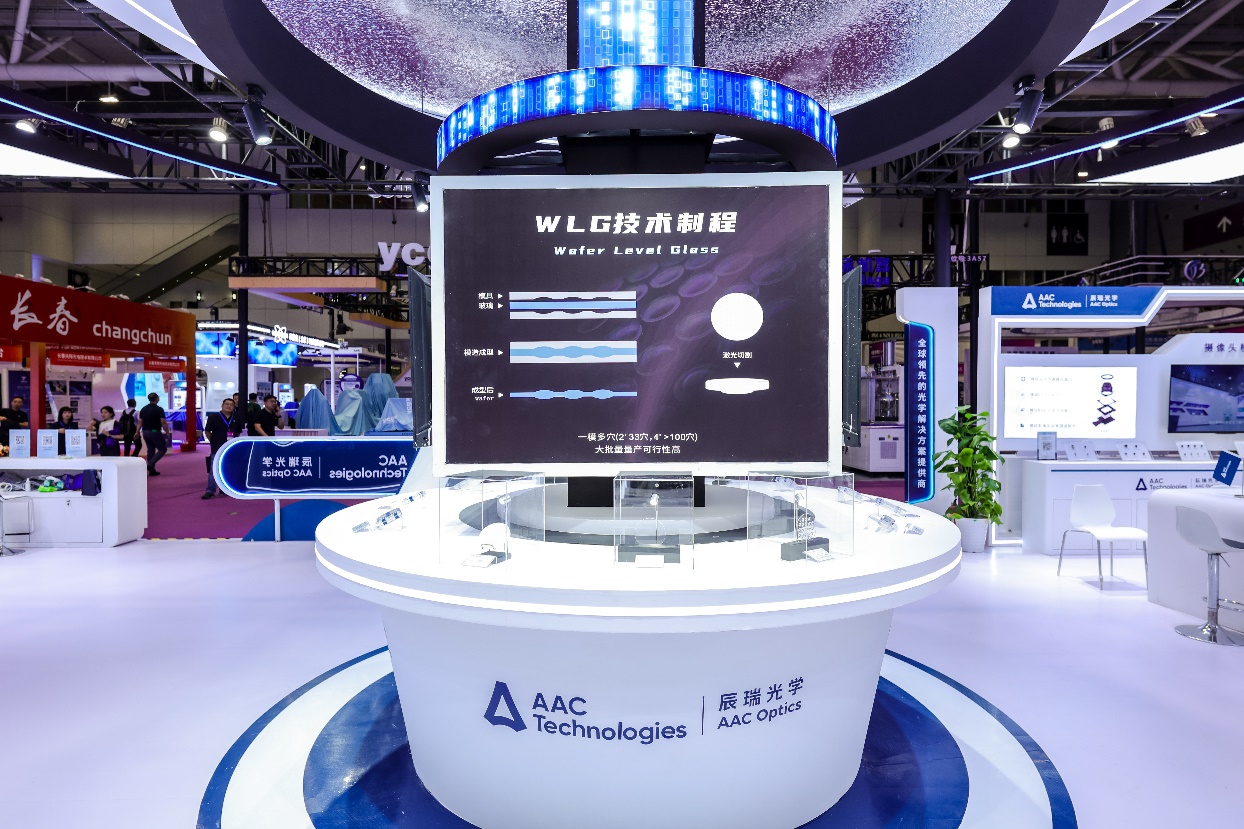
After process and key equipment mold upgrades, the overall output per WLG mold has increased by 6–7 times. In flagship smartphone applications, WLG technology has already demonstrated performance far beyond traditional technologies in terms of yield, precision, and optical requirements, and the pattern for large-scale mass production and application has now been opened.
It is worth noting that, as a platform technology, WLG can be used to produce a variety of products, including aspherical lenses, freeform lenses, aspherical prisms, array lenses, and collimating lenses, winning customer favor through its ultimate manufacturing process and superior optical performance.
In the future, AAC Technologies’ WLG lenses are expected to drive even broader market applications, explore new frontiers in mobile optics for smart devices, and create an ultimate imaging experience.
